
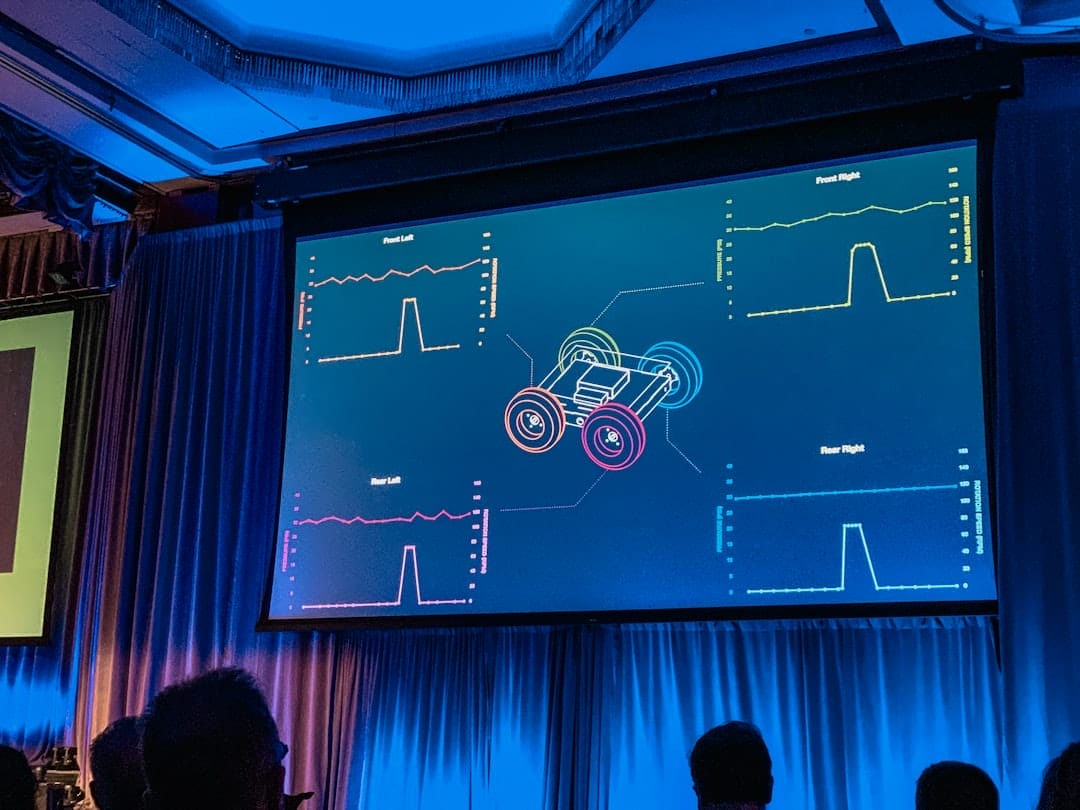
Welcome, dear audience, to the grand spectacle of the future! Today, we embark on a journey through the kaleidoscopic landscape of tomorrow, where the impossible becomes possible and the absurd is merely a Tuesday. As we gather here, let us take a moment to appreciate the irony of our existence: we are living in an age where we can predict the future with a level of accuracy that would make Nostradamus weep with envy, yet we still can’t seem to figure out how to keep our socks from disappearing in the laundry.
In this keynote, we will explore the myriad ways in which technology is reshaping our lives, from the rise of artificial intelligence to the dizzying heights of quantum computing. Each topic will serve as a portal into a world where innovation reigns supreme, and where the only constant is change itself. So, buckle up, dear friends!
We are about to dive headfirst into a whirlwind of ideas that will leave you both exhilarated and slightly bewildered—much like trying to assemble IKEA furniture without the instructions.
Key Takeaways
- Futurist keynotes provide insights into upcoming trends and technologies that will shape our future.
- Artificial intelligence has the potential to revolutionize industries, but also raises concerns about job displacement and ethical implications.
- Virtual reality is set to transform various sectors, from entertainment and gaming to healthcare and education.
- The rise of 5G technology will enable faster connectivity and drive innovation in areas such as IoT and autonomous vehicles.
- Automation and the future of work will require a shift in skills and education to adapt to the changing job landscape.
The Impact of Artificial Intelligence on Society
Artificial intelligence (AI) is no longer just a figment of science fiction; it has become an integral part of our daily lives. From virtual assistants that remind us to buy milk to algorithms that curate our social media feeds, AI is everywhere—like that one friend who shows up uninvited to every party. But what does this mean for society?
On one hand, AI has the potential to revolutionize industries, streamline processes, and even save lives. Imagine a world where medical diagnoses are made with pinpoint accuracy by machines that never tire or lose focus. It’s like having a superhuman doctor who doesn’t need coffee breaks!
However, as we embrace this brave new world, we must also confront the darker side of AI. The rise of automation threatens to displace millions of workers, leaving them to ponder existential questions like, “What do I do now?” and “Is it too late to become a professional cat influencer?” Moreover, the ethical implications of AI decision-making raise eyebrows and questions alike. Who is responsible when an autonomous vehicle makes a split-second decision that results in an accident?
The car? The manufacturer? Or perhaps the person who forgot to charge it?
As we navigate this complex landscape, it’s crucial to strike a balance between harnessing AI’s potential and safeguarding our humanity.
The Role of Virtual Reality in the Future

Virtual reality (VR) is not just for gamers anymore; it’s poised to transform how we experience everything from education to entertainment. Picture this: instead of sitting in a stuffy classroom listening to a lecture on ancient history, students can don VR headsets and find themselves wandering through the bustling streets of ancient Rome. They can interact with holographic figures of Julius Caesar and ask him why he didn’t just stay home that fateful day.
The possibilities are as endless as a Netflix binge session on a rainy Sunday. Yet, as we immerse ourselves in these digital realms, we must also consider the implications of living in a world where reality can be manipulated at will. What happens when people prefer their virtual lives over their actual ones?
Will we see a rise in “virtual hermits” who refuse to leave their homes because they can’t bear the thought of facing reality without their trusty headset? And let’s not forget about the potential for VR addiction—after all, who wouldn’t want to escape into a world where they can be a dragon-slaying hero instead of dealing with their taxes? As we embrace this technology, it’s essential to maintain a healthy relationship with reality while exploring the wonders of virtual experiences.
The Rise of 5G Technology and Its Implications
Ah, 5G—the technology that promises to make our internet speeds faster than a caffeinated squirrel on roller skates. With its lightning-fast connectivity and low latency, 5G is set to revolutionize everything from streaming movies in ultra-high definition to enabling smart cities that can communicate with each other like gossiping neighbors. Imagine a world where your refrigerator can order groceries before you even realize you’re out of milk!
It’s both thrilling and slightly terrifying. However, as we race toward this hyper-connected future, we must also grapple with the implications of such rapid technological advancement. The rollout of 5G has sparked debates about privacy and security, as more devices become interconnected and vulnerable to cyberattacks.
Will our smart homes turn into smart prisons where hackers can control our lights and thermostats? And let’s not forget about the environmental impact—more devices mean more energy consumption. As we embrace the speed and convenience of 5G, it’s crucial to consider how we can harness this technology responsibly while ensuring that our digital lives don’t come at the expense of our physical world.
The Future of Work and Automation
As automation continues its relentless march forward, many are left wondering what the future holds for work. Will robots take over our jobs and leave us with nothing but existential dread and an unhealthy obsession with cat videos? Or will they free us from mundane tasks, allowing us to pursue our passions and hobbies?
The truth likely lies somewhere in between—a delicate dance between human creativity and machine efficiency. In this brave new world, workers will need to adapt and evolve. Skills that were once considered essential may become obsolete faster than you can say “robot uprising.” Lifelong learning will become the norm as individuals seek to stay relevant in an ever-changing job market.
But fear not! This shift also presents opportunities for innovation and entrepreneurship. With automation handling repetitive tasks, humans can focus on creative problem-solving and collaboration—skills that machines have yet to master.
So while the future may seem daunting, it also holds the promise of a more fulfilling work experience for those willing to embrace change.
The Ethical Considerations of Biotechnology Advancements

Biotechnology is advancing at breakneck speed, offering solutions that were once confined to the realm of science fiction. From gene editing technologies like CRISPR to lab-grown organs, these innovations hold immense potential for improving human health and well-being.
As we delve deeper into the realm of biotechnology, ethical considerations loom large. Who gets access to these groundbreaking treatments? Will they be available only to those who can afford them, creating a new class divide between the genetically enhanced elite and everyone else?
And what about the moral implications of editing human genes? Are we playing God or simply taking advantage of scientific advancements? These questions demand thoughtful consideration as we navigate the uncharted waters of biotechnology.
The Integration of Blockchain Technology in Various Industries
Blockchain technology has emerged as a buzzword that seems to pop up everywhere—from finance to supply chain management. At its core, blockchain offers a decentralized and transparent way to record transactions, making it nearly impossible for anyone to tamper with data without leaving a trace. It’s like having a digital ledger that everyone can see but no one can erase—perfect for those who have ever wished they could erase their embarrassing high school yearbook photos.
The potential applications for blockchain are vast and varied. In finance, it promises to streamline transactions and reduce fraud; in supply chain management, it can enhance traceability and accountability; and in healthcare, it offers secure ways to store patient data. However, as with any emerging technology, challenges abound.
Regulatory hurdles, scalability issues, and public skepticism must be addressed before blockchain can reach its full potential. As we explore this innovative technology, it’s essential to remain vigilant about its implications while harnessing its power for good.
The Potential of Quantum Computing and Its Applications
Quantum computing is often described as the next frontier in technology—a realm where traditional computing limitations are shattered like glass underfoot. By harnessing the principles of quantum mechanics, these supercomputers promise to solve complex problems at speeds unimaginable with classical computers. Imagine being able to crack encryption codes or simulate molecular interactions in seconds rather than years!
It’s enough to make any tech enthusiast giddy with excitement. However, as we stand on the precipice of this quantum revolution, we must also consider its implications for society. The power of quantum computing could render current encryption methods obsolete, raising concerns about data security and privacy.
Additionally, as industries race to adopt this technology, there’s a risk that those without access will be left behind—creating yet another digital divide in an already unequal world. As we venture into this brave new quantum realm, it’s crucial to approach these advancements with caution and foresight. In conclusion, as we navigate this ever-evolving landscape of technology and innovation, let us remember that while the future may be bright (and occasionally bewildering), it is ultimately shaped by our choices today.
By embracing change while remaining mindful of its implications, we can create a future that is not only technologically advanced but also ethically sound and inclusive for all. So here’s to tomorrow—may it be filled with wonder, laughter, and perhaps just a touch less sock disappearance!